

Frequently asked questions
If something else is on your mind, write to us — we answer the same day.
Can I use soap?
Yes. A little dish soap will not harm a seasoned surface. What you should avoid is soaking the pan or putting it in the dishwasher.
Is it dishwasher safe?
No. Prolonged water and strong detergent strip the oil layer and the pan will rust.
My pan has rusted — is it ruined?
No. Rust is the one fault in cast iron that fully reverses. Scrub it off with steel wool, dry the pan thoroughly and season it again.
What should I do before first use?
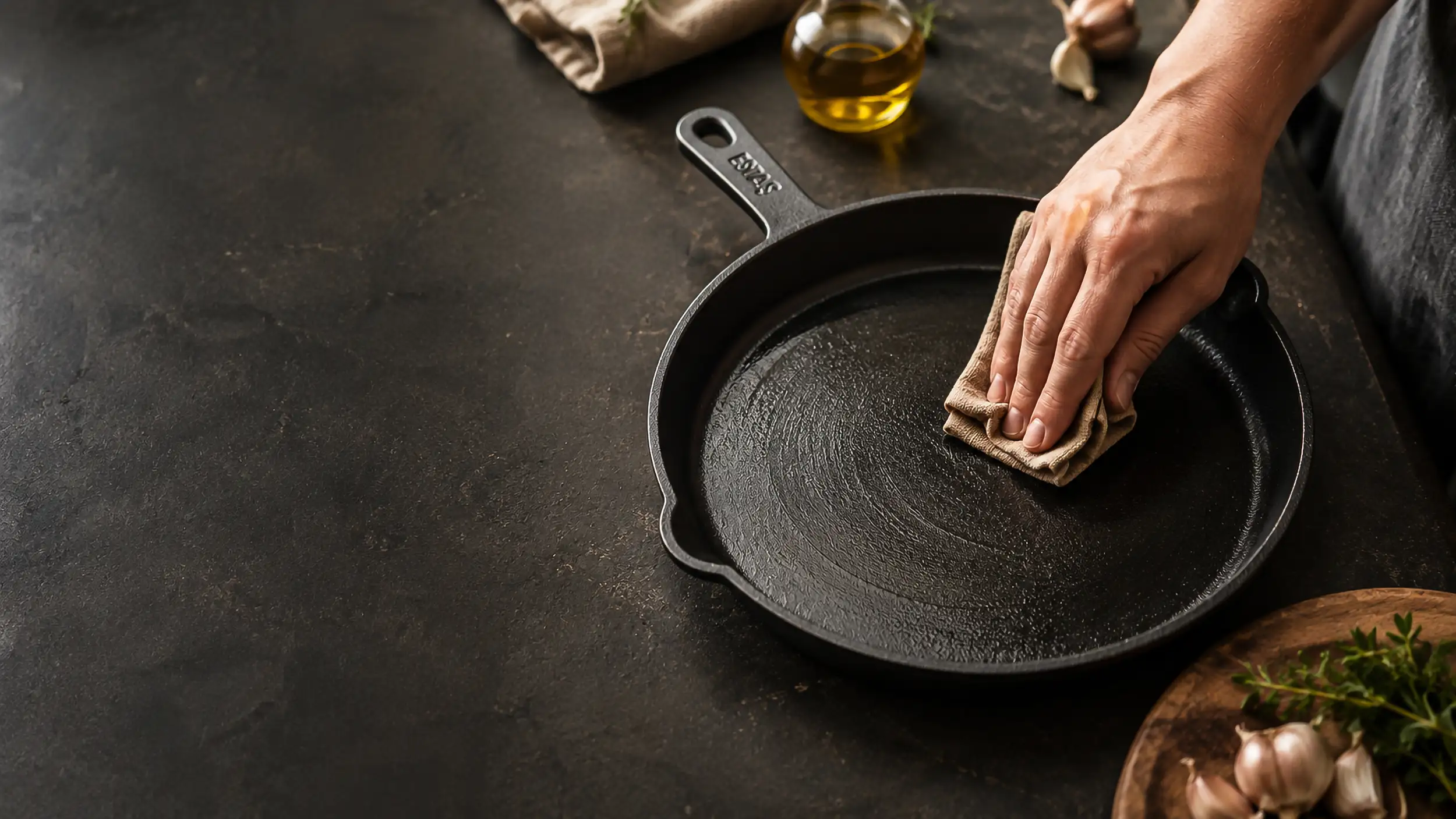
Wash it in warm water, dry it, wipe on a thin coat of oil and cook your first meal. It arrives seasoned from the foundry.
Does it work on induction?
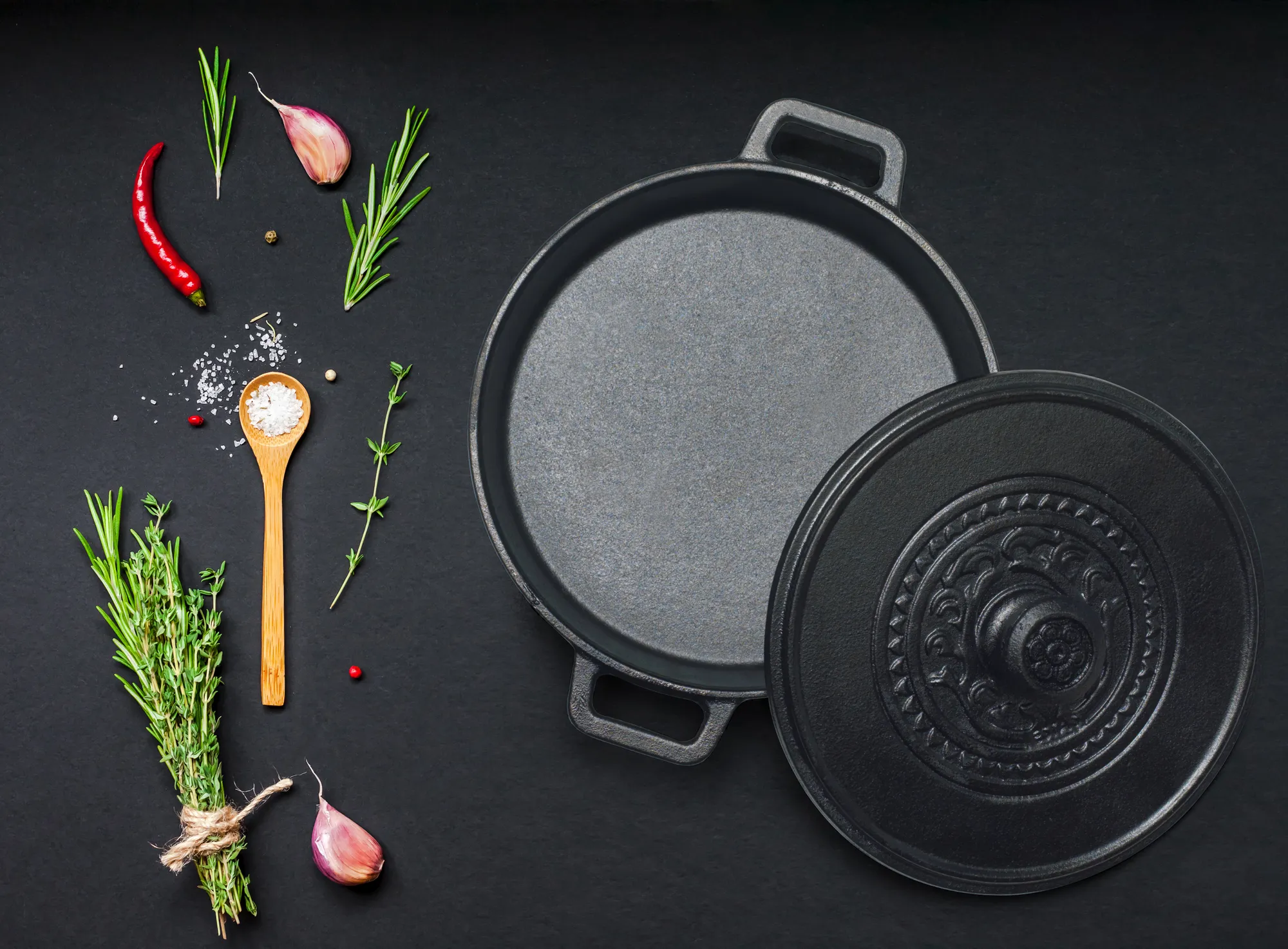
It does. Cast iron works on every heat source: gas, electric, induction, oven and open fire.
Why does the handle get hot?
The pan is cast in one piece; the handle is the same iron as the body and it heats with it. Use a holder or a folded cloth.
Why do eggs stick?
Usually one of two reasons: the pan was not hot enough, or the seasoning is still young. Preheat properly, oil the food rather than the pan, and give it a few more cooks.
How should I store it?
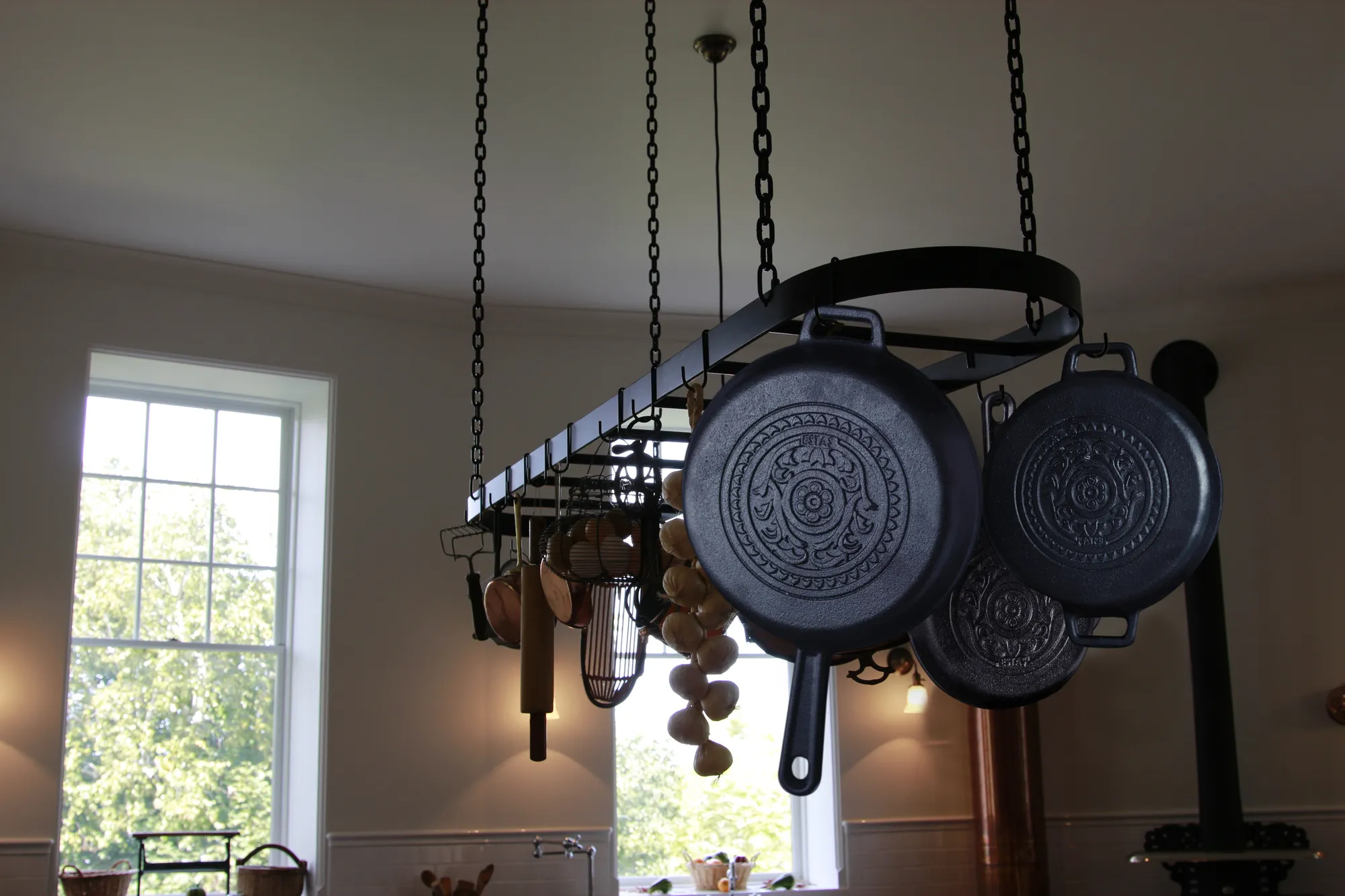
Somewhere dry, without the lid closed. If you stack pans, put paper towel between them so air can move and moisture cannot gather.
Can I cook acidic food in it?
Avoid acidic foods such as lemon, orange, bitter orange and artichoke: the acid attacks the oil layer on the surface. Everything else you can cook without a second thought.
Should I heat the pan on high?
No. Heat it slowly and all the way through; that gives the best results. Once it is hot you can carry on at a lower setting. Cast iron holds heat for a long time, so it never needs a high flame.
How do I season it in the oven?
Rub a thin coat of unsaturated oil inside, outside, around the rim and over the handle, then wipe off the excess. Put the pan on the top rack, with foil on a lower shelf to catch drips. Bake at 220-250 °C for one hour without opening the door. When the hour is up, open the door and let the pan cool inside the oven.
Which oil should I use?
Unsaturated oils: sunflower, flaxseed and soybean oil. Butter and olive oil are not suitable; they burn before they ever reach seasoning heat.
The surface turned sticky, what went wrong?
You most likely used too much oil; a thin film is enough. Any seasoning residue you can see on the pan is harmless and fades as you keep cooking.
The pan has gone darker, is that a problem?
Quite the opposite. Every cook thickens the oil layer, the colour deepens and the surface releases food better. There is no coating to lose: even if the layer wears, seasoning brings it back.
Can I use metal spatulas, forks and knives?
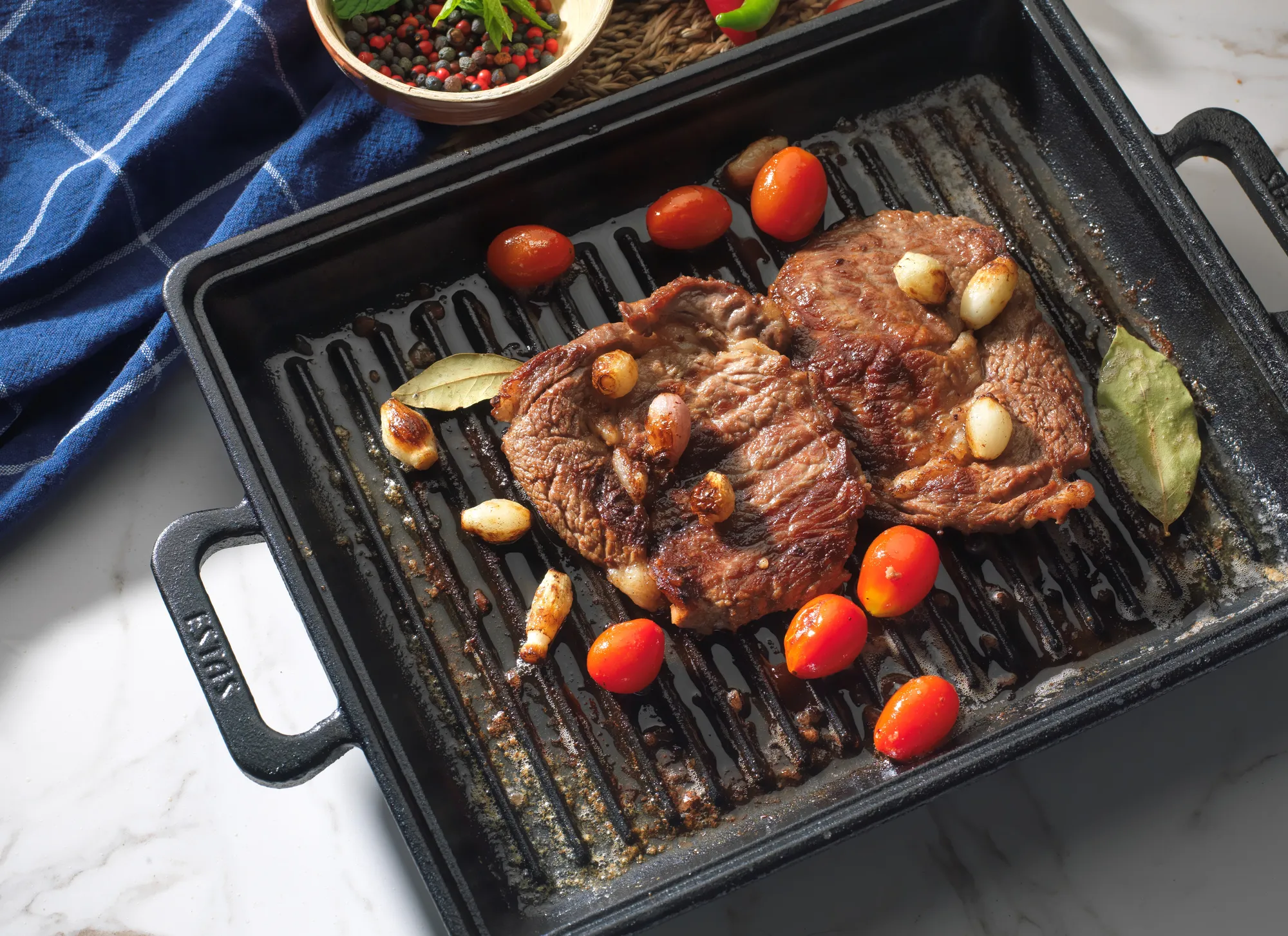
Yes, metal contact will not harm the pan. Just don't run electric mixers inside it, as that can damage the whole surface.
How do I get stuck-on food off?
Let the pan cool, fill it with hot water and leave it for 15-20 minutes, then wash it with hot soapy water or scrub it with salt. For stubborn marks a scouring pad works, but it wears the surface down, so always season the pan again afterwards.
Where should I put the hot pan down?
On a silicone mat, a wooden surface or a trivet. You can take it straight to the table on a stand and serve from it; use heatproof gloves to carry it, and let it cool somewhere children cannot reach.
Can it go in the microwave?
No. Everything else is fine: gas, electric, solid plate, glass and vitroceramic hobs, induction, the oven, charcoal and a wood fire.
What is not covered by the warranty?
Damage from drops and knocks, damage from misuse, and stains, discolouration or scratches caused by overheating, scraping or a dishwasher. Rust and discolouration come from use and are easy to put right with the steps in the manual.