

Seasoning and Care
Build the surface, clean it, keep rust away.
A thin layer of oil. A pan for years to come.
Seasoning turns a thin layer of vegetable oil into a protective layer on cast iron through heat. It helps food release from the pan and protects the iron from moisture.
This layer develops with use: the pan darkens and its cooking surface improves. Regular cleaning, thorough drying and a thin coat of oil when needed help maintain it.
Seasoning on the stovetop
-
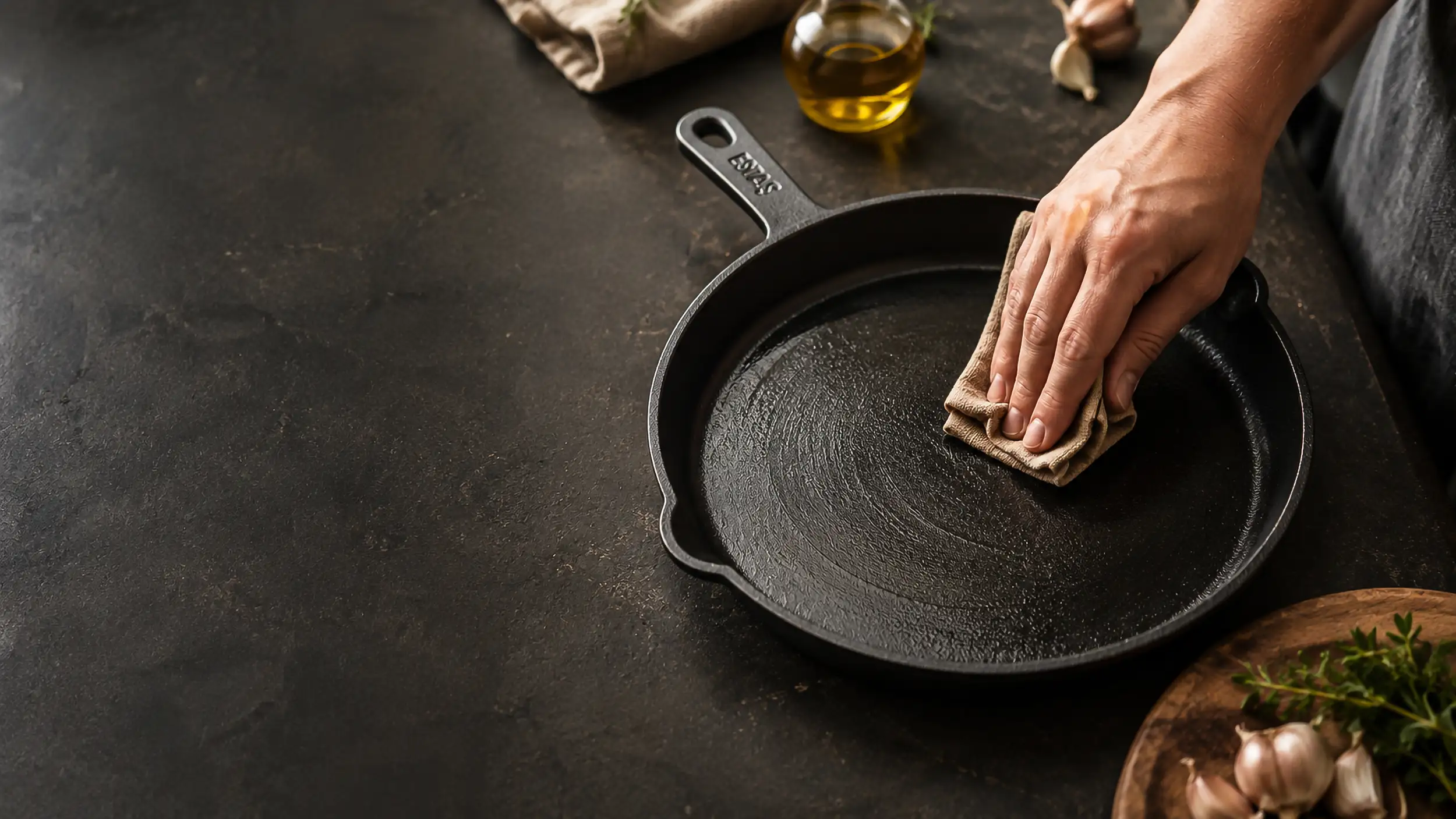
Oil it
A few drops inside the pan. Any more and the surface turns sticky.
-
Wipe it
Work it into the inside, the rim, the outside and the handle, then wipe until the pan looks unoiled.
-
Heat it
Heat on the stove for 15–20 minutes, until it smokes. The smoke means it is done — turn the heat off and let the pan cool on its own.
Cleaning and rust care
Removing oxidation and rust
Open on YouTubeCommon questions
All questionsWhich oil should I use?
Soybean, flaxseed, avocado and sunflower oil are all suitable. Butter and olive oil are not: they burn before they ever reach seasoning heat.
Can I use soap?
Yes. A little dish soap will not harm a seasoned surface. What you should avoid is soaking the pan or putting it in the dishwasher.
Is it dishwasher safe?
No. Prolonged water and strong detergent strip the oil layer and the pan will rust.
My pan has rusted — is it ruined?
No. Rust is the one fault in cast iron that fully reverses. Scrub it off with steel wool, dry the pan thoroughly and season it again.